

Is it time for the meat industry to go nitrite-free?

For years they’ve been used by food manufacturers to give bacon its distinctive colour and flavour, but over the course of the past 12 months nitrites have come under scrutiny like never before.
In May 2025, a coalition of health and food science experts called on governments around the world to ban the use of nitrites as an ingredient in meat production as evidence grows of their link to cancer. The group includes three former World Health Organisation (WHO) experts along with Professor Chris Elliott from Queen’s University Belfast, who led the UK Government’s review into the 2013 horsemeat scandal.
There is no sign yet that governments plan to bow to demands from campaigners for an outright ban; there is however evidence of regulators taking a more precautionary approach to nitrites’ use. From October, the maximum permissible levels of nitrites for products sold in the EU were slashed by almost half. The decision follows a 2023 risk assessment by the European Food Safety Authority (EFSA) which found levels of exposure to nitrite-causing nitrosamines are a health concern for people of all ages.
“The link between nitrites in processed meats and cancer has been established for some time”
- Professor Walter Willet, Harvard School of Public Health
So what does the evidence tell us about the dangers of nitrite-cured meats? And is it time for nitrites to be phased out altogether?
Nitrites and nitrates are chemicals that occur naturally, typically in low concentrations, in soils, water and plants, especially leafy vegetables. Both nitrites and nitrates are authorised as food additives within the EU and UK and are often used in the production of processed meat – defined as meat that has been preserved by smoking, curing, salting or adding preservatives. They are typically added to products such as bacon, ham and continental sausages like Frankfurters to keep the food looking red and to aid the development of the cured flavour. Nitrite is the active curing ingredient responsible for the preservation of the food in combination with other ingredients, like salt. When added to food, nitrate converts to nitrite before it exerts its preservative function. Nitrite also prevents the growth of harmful bacteria like Clostridium botulinum, which can cause the life-threatening illness botulism.
Nitrites are not of themselves harmful, but when they are consumed in processed meat products nitrites are linked to the formation of nitrosamines in the stomach – compounds associated with the development of colorectal (bowel) cancer. As such, their use as a processing aid should be banned, according to the Coalition Against Nitrites.
“The link between nitrites in processed meats and cancer has been established for some time,” says Professor Walter Willet from the Harvard School of Public Health, and Coalition Against Nitrites member. “The nitrites react with secondary amines in the meat during the cooking and ingestion processes to produce nitrosamines and so they should not be used in products like bacon and ham. It is time for governments globally to step in and ban the use of these chemicals, or for food producers to make the right decision for human health and remove these dangerous chemicals themselves from their products.”
Nitrite-free
Alternatives to nitrites do exist. Irish food manufacturer Finnebrogue has built a market-leading position with its Naked brand of ham and bacon made without nitrites, which uses natural fruit and spice extracts to replicate the pink appearance and natural flavour of nitrite-cured meats.
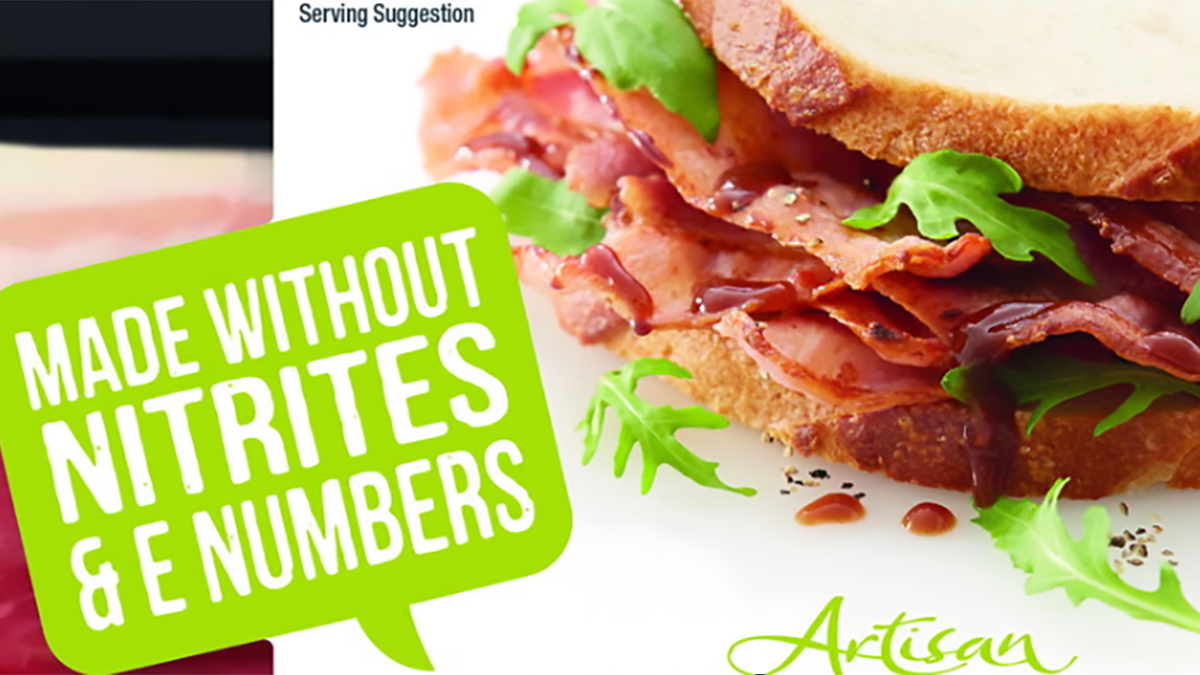
Other suppliers, like Ireland’s Divilly Meats, also produce branded nitrite-free products, while retailers such as M&S and Waitrose sell nitrite-free options under their private label brands. In fact, Professor Elliott says all major meat processors in the UK now have the capability to produce some variant of nitrite-free meat. “Everybody can do it now, and everybody is doing it,” he says.
The market, however, remains dominated by nitrite-containing products, partly due to their more favourable cost and convenience. “Nitrites have been around a long time. They’re produced industrially, which makes them quite cheap, whereas the ingredients we're using are natural fruit and spice extracts,” explains Declan Ferguson, R&D, sustainability and technical director at Finnebrogue.
Meat produced using nitrites also benefits from a slightly longer shelf-life of around 30-35 days compared with around 25 days for Naked bacon, says Ferguson.
Yet what little market growth exists is being driven by nitrite-free products. Ferguson notes that while overall demand for bacon is in long-term decline, demand for Finnebrogue’s products continues to grow. “There’s still a big gap [in sales] between the two but the segment we produce into is the segment in growth,” he says.
Health concerns
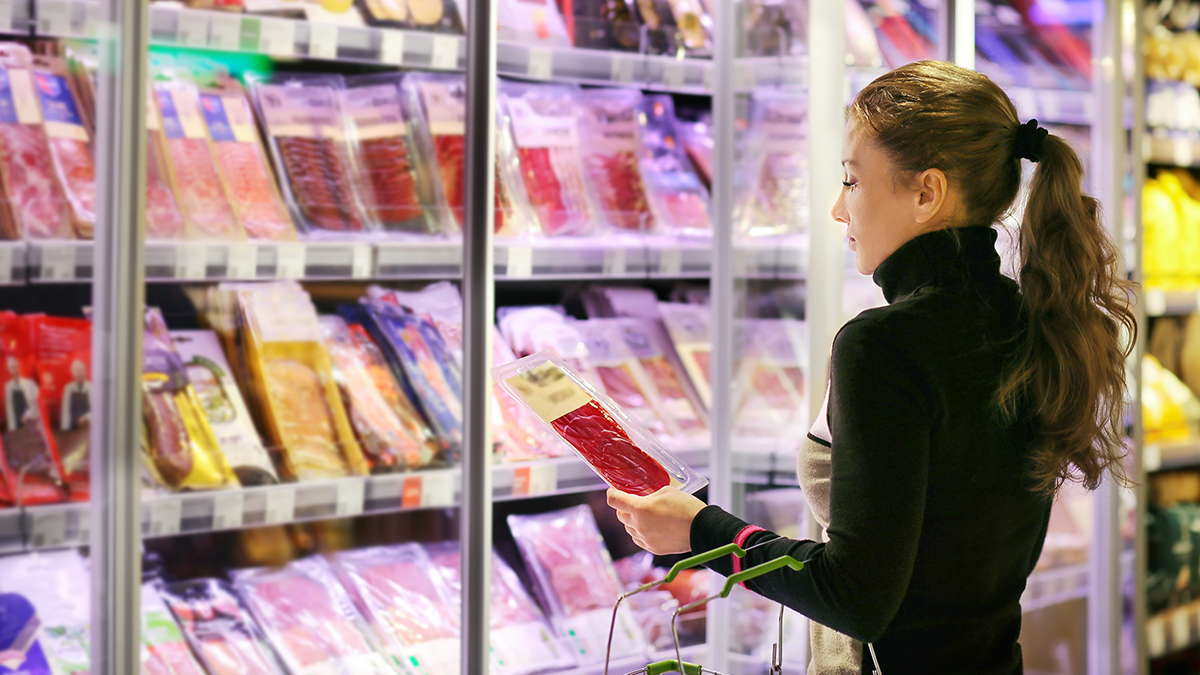
Back in 1974, the average UK consumer purchased 116g of uncooked ham or bacon per week, according to UK Government statistics. That figure has since fallen to just 59g in 2023 amid growing awareness of the health risks associated with excessive consumption of processed meats.
In 2015, the World Health Organisation (WHO) classified processed meats as a group 1 (scientifically proven) carcinogen, with a particular risk of causing bowel cancer. Since then, moderating processed meat consumption has become a key pillar of dietary advice from international health authorities.
Experts like Professor Elliott believe the presence of nitrites is a significant risk factor. Prior to EFSA’s 2023 evidence review, a 2022 study by the French Agency for Food, Environmental and Occupational Health & Safety had confirmed a link between the risk of cancer and nitrites in processed meats and recommended limiting dietary exposure.
Although there is widespread agreement that a high level of exposure to nitrites is harmful to health, there remains disagreement over whether nitrites are really needed to prevent the growth of bacteria like Clostridium botulinum. The UK Food Standards Agency considers that existing levels of nitrites and nitrates are sufficiently protective for consumers, and maintains that nitrites are important preservatives that have undergone a rigorous safety assessment prior to being authorised and help limit the growth of bacteria that cause botulism.
Professor Elliott, however, highlights a 2019 report commissioned by the British Meat Processors Association (BMPA) and reported by The Observer newspaper which found no evidence that nitrites provide extra protection against botulism. Researchers tested both nitrite-free and nitrite-cured samples of bacon and ham and found no significant growth of Clostridium botulinum in either.
In response, the BMPA says the report’s findings do not provide conclusive evidence that nitrites are not needed to guard against the risk of botulism and the development of other harmful bacteria. “The study was of a small sample of tests that were carried out in a laboratory. It was not a representative sample that you would base a scientific decision on,” says David Lindars, technical operations director at the BMPA. He also notes the study was not peer-reviewed.
Regulatory shift
A stricter regulatory landscape is likely to result in more manufacturers increasing their capacity to produce nitrite-free products, or at the very least reduce the levels of nitrites in processed meats. Effective from October 9th, 2025, the EU lowered the maximum permissible levels of nitrites (E 249–250) added during the manufacturing of meat products. General meat products were reduced from 150 mg/kg to 80 mg/kg; sterilised meat products were reduced from 100 mg/kg to 55 mg/kg; while traditionally cured meats now have specific limits set between 100–105 mg/kg, depending on the product.
Food businesses supplying the EU will be expected to review and potentially reformulate their products to comply with the new additive limits. They will also need to monitor residual levels of nitrites throughout the product’s shelf-life to comply with new limits ranging from 25 to 50 mg/kg for various categories.
The EU says the regulatory changes aim to balance the preservation benefits of nitrites with the need to minimise health risks associated with their consumption.
Market dynamics
The UK Government has yet to follow the EU’s lead in reducing permissible limits, however most experts believe the move towards harmonisation of UK and EU agri-food standards, as outlined in May’s Common Understanding document, will ultimately require the UK to fall in line with the bloc’s position once the agreement has been ratified. Indeed, The Grocer magazine reported in May that British ham and bacon producers are already getting ahead of future regulation by voluntarily cutting the use of nitrites in order to comply with the new EU rules.
Those like Finnebrogue making the move to produce nitrite-free alternatives are required to have their preservation techniques and HACCP system validated by the regulator before products can be placed on the market. Prior to launching the Naked brand in 2017, Ferguson says the company worked with the UK Food Standards Agency, public analysts and the local authority to prove that the product was safe and legal.
Innovation often centres on finding ways to use the antioxidant properties of natural ingredients like fruit and vegetables to replicate the functions of nitrites. The hope among campaigners is that a combination of further ingredient innovation, capacity-building among meat processors, tighter regulation, and growing consumer and retailer demand for healthier alternatives will see nitrite-free ham and bacon capture a growing share of the market in the years ahead.
“We’re doing quite a lot of lobbying with some of the main retailers with the hope that one or more will actually go nitrite-free over the next couple of years,” says Professor Elliott. “People are looking at what is the commercial advantage of this.”